our sustainabilityjourney

We're on a mission to increase the volume of british-grown stems, reducing the carbon footprint of every bouquet, and supporting our local growing communities.
A British flower grower carrying a bunch of freshly cut stems through the field
Since 1981

Postcards, but prettier

Flying Flowers began sending flowers by post in 1981, when holidaymakers sent carnations home from Jersey instead of postcards. Almost 50 years later, we're still spreading happiness with our beautiful bunches, with flowers by post across the UK.

We have a responsibility to reduce our environmental impact and we do this by carefully selecting suppliers that align with our purpose priorities for people and planet. Every industry, business and consumer has a role to play towards a more sustainable future and together we can make positive changes.

Making beautiful things happen
by protecting our natural world

Our business is built on the beauty of the natural world. This is how we're protecting it.

Taking action within our own business and working with our colleagues and local suppliers to drive positive impact.
Collaborating to find solutions to industry-wide challenges.
Equipping customers with the tools, information and options to shift mindsets and make more sustainable decisions.

British stems, by the numbers

Where our flowers are grown, and how much of every bunch starts life in British soil.

British sourced stems 2025-27
1 million
Our goal; for flowers grown right here in the UK
Progress: we are on track to reach our goal before the end of 2027
British Bouquets 2026-27
No1
Our goal; Customers will choose British Grown Seasonal flowers as their 1st choice
Summer 2026 British flower bouquets were our best seller
Share of stems by origin
40%
Our ambitious goal: 40% of stems sold by Flying Flowers will be locally grown
Q2 2026 30% of stems sold were British

British stems through the season

Nature sets the pace — we want you to make good choices by choosing our British-grown flowers and embracing 'in season' blooms. The share of stems rises and falls as the growing season shifts.
Spring
Favourite stems
Tulips & Daffodils
Summer
Favourite stems
Peonies & Sunflowers
Autumn
Favourite stems
Gladioli
Winter
Favourite stems
Narcissi
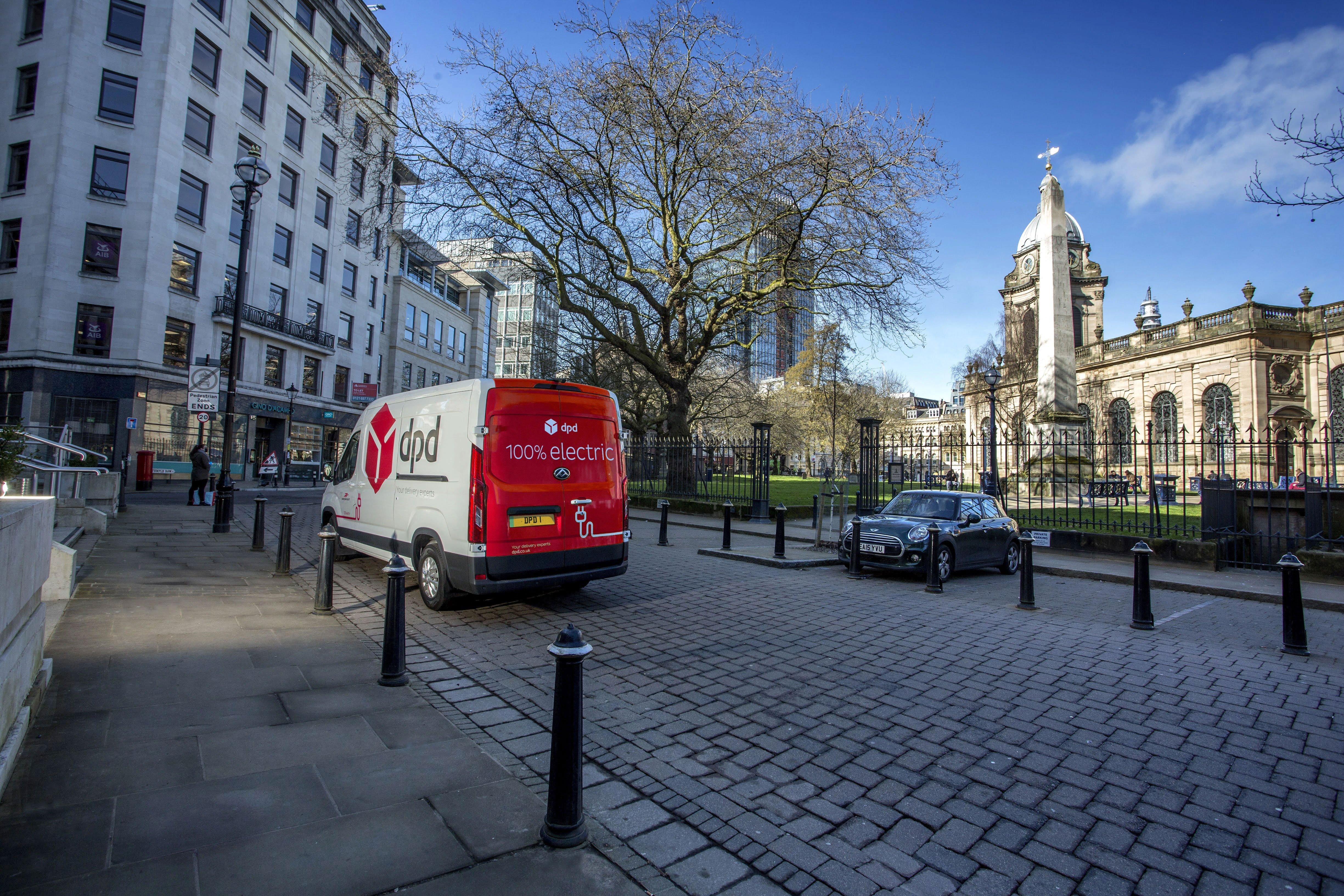
A DPD all-electric delivery van
DPD
Our delivery partner

Electric to your door

The last leg of every order is handled by our delivery partner DPD — the % of deliveries made by electric vehicles increases every year. Here's how their journey to Net Zero is progressing, and what it means for the footprint of your flowers.

22,694
parcels on all-electric vehicles · 21.53%
6,264kg
of CO₂ saved on the final mile
More on DPD's green commitments →
DPD's road to Net Zero

Delivering with a lighter footprint

At a recent customer sustainability webinar, DPD's General Manager of Sustainability, Kerri Nadel, set out how fleet electrification, renewable energy, alternative fuels and waste reduction are helping DPD decarbonise — while giving customers like us the data we need for our own environmental reporting.

43%
emissions cut by 2030
90%
by 2040
As part of the GeoPost Group, DPD holds SBTi-validated targets to cut Scope 1, 2 and 3 emissions by 43% by 2030 and 90% by 2040 — and DPD UK has already achieved a 43.2% reduction against its 2020 baseline. The Science Based Targets initiative is an independent body that verifies such targets are realistic and achievable.
DPD's 2026 dashboard · year to date
36.46%
EV final-mile van fleet
53,440,283
Electric deliveries
14,281
Tonnes CO₂ saved — electric deliveries
16,895
PickUp point locations
67.00%
HVO across HGV fleet
25,968
tCO₂e saved using HVO *
3,591,290
kWh generated by solar
39,111
Trees planted — Go Zero
* CO₂e saving compared with the use of standard diesel.

How they're getting there

Fleet electrification
From 17 vans and 30,000 parcels in 2018 to around 3,800 EVs delivering more than 85 million parcels by the end of 2024. Another 682 electric vehicles join from September, taking the final-mile fleet to 40% electric by year end — with over 100 million electric deliveries expected annually.
Cleaner linehaul
Around 73% of DPD's HGVs now run on HVO renewable diesel, cutting CO₂ by as much as 90% versus conventional diesel. They're trialling electric HGVs (the MAN eTGX and Mercedes eActros), have ordered their first Mercedes eHGV, and are exploring rail freight for longer routes such as Scotland.
Renewable energy
100% renewable-backed electricity — as at Interflora — plus nearly 23,000 solar panels across the UK network, generating more than 5.5 million kWh of renewable electricity during 2025.
Carbon budgeting
Carbon is managed much like financial spend, with annual emissions targets set and monitored to make sure progress stays on track.
Reporting for customers
Free emissions reporting tools — electric delivery certificates and accredited carbon reports — give us the detailed Scope 3 data we need to understand and manage the impact of our deliveries.
Zero waste & nature
100% landfill diversion for four consecutive years, and more than 400,000 trees planted since 2021 with partners including TreeApp, FareShare, the RSPB and Forestry England — alongside habitat restoration and redistribution of undeliverable food to communities in need.

Our road map to a sustainable future

Four decades of small changes, and the bigger commitments still ahead.

1981
Flying Flowers begins — holidaymakers start sending carnations home from Jersey instead of postcards
2021
Helium balloons stopped
Saving 2.3m litres of helium and 1.4 tonnes of single-use plastic every year
“The Green Machine” arrives — our diesel van is replaced with a new zero-carbon electric vehicle, saving 85 gallons of diesel a year. Our Head office building switches to renewable electricity
Our head office building
2022
We sign the British Retail Consortium’s Climate Action Roadmap, committing to net zero by 2040
2023
Less packaging per product
Our ongoing work reduces the amount of packaging per product year on year. We switch to paper protection for our plant gifts.
2024
Our flower bouquets are delivered plastic free. And by 2025 we send our flowers with compostable hydration pouches
Flying Flowers packaging and care guide
2040
Net zero across our own operations and the products we sell, as committed under the British Retail Consortium’s Climate Action Roadmap
On a quest to bee noisy

Flying Flowers saving bees

Bees are in decline on a global scale, and in the last 10 years the UK has lost a third of ours. The biggest impact on their health is habitat loss in woodlands and urban environments.

Through free learning resources for primary schools, we're encouraging the next generation to make positive changes to their natural environment and save our wild pollinators. Created in partnership with teachers, our “Bee A Superhero” activity pack is set to inspire young minds while seamlessly aligning with the current school curriculum.
100
schools given our learning resources, as far afield as Canada and Australia
Defra
recognised our work in support of pollinators
2025
awarded a ‘Bees Needs’ award
Join our fight to save the bees
Take the pledge

The Wild Square Challenge

Britain has lost 97% of its wildflower-rich meadows. One square metre of wild garden can support dozens of pollinating insects — left uncut, unsprayed and free to do what nature does best.

Helps us to restore pollinator-friendly habitats, together we can make a difference

1m²
Find a patch of garden, or a place for a window box
Apr–Sep
Plant pollinator-friendly flowers and let them grow wild
Your postcode
Add it to the map — two homes on one street can make a difference
Flying Flowers packaging and flower care guide
Plastics & packaging

Less in the box, more in the bloom

We're working to improve the sustainability of all our products, including transit packaging and sundries — ribbon, wrap, vases and gift boxes. Our focus is identifying the items with the most negative impact on our planet, and replacing them with sustainable and circular alternatives wherever possible.

What we're doing next

The work already under way

Increasing British stems
A huge proportion of flowers bought in the UK are imported from as far afield as Ecuador, Colombia, Ethiopia and Kenya. We're on a mission to increase the volume of home-grown stems used in floristry — approaching seasonal product development with a “British first” lens, and raising public awareness of the beauty and benefit of British stems.
Sustainable supply chains
To ensure we're partnering with suppliers that share our values, we have created a set of guidelines for our expectations on environmental and ethical requirements — a clear set of minimum expectations and stretch targets across emissions and resource use, plastics and packaging, DE&I, and ethical trading.
Reducing resource use
Further reducing the amount of energy, water and waste we consume and dispose of in our direct operations — at head office and at our Product Development & Photography Unit.
What's coming in the future

Where we're heading

Make all sundries sustainable
We'll review our existing sundries range with a “cradle to grave” lens, and by creating all new sundries through that same lens, we'll minimise the environmental and social impact our finished consumer products have on our planet and communities.
Cutting our own footprint
Reducing the carbon footprint of our direct operations and employee travel — aiming to transition to a zero business at Scope 1, 2 and limited Scope 3, to reduce the impact of our direct operations on the planet.
Internal sustainability training
Ensuring all of our colleagues receive sustainability training on how we can make a positive contribution to our environment, both as individuals and collectively as a business.
Measuring our bouquets' carbon footprint
Collaborating with Global Flower Services (GFS) on the development of a tool to measure the carbon footprint of any bouquet sold — measuring CO₂ in kilograms across flower production and distribution to the main country hub.
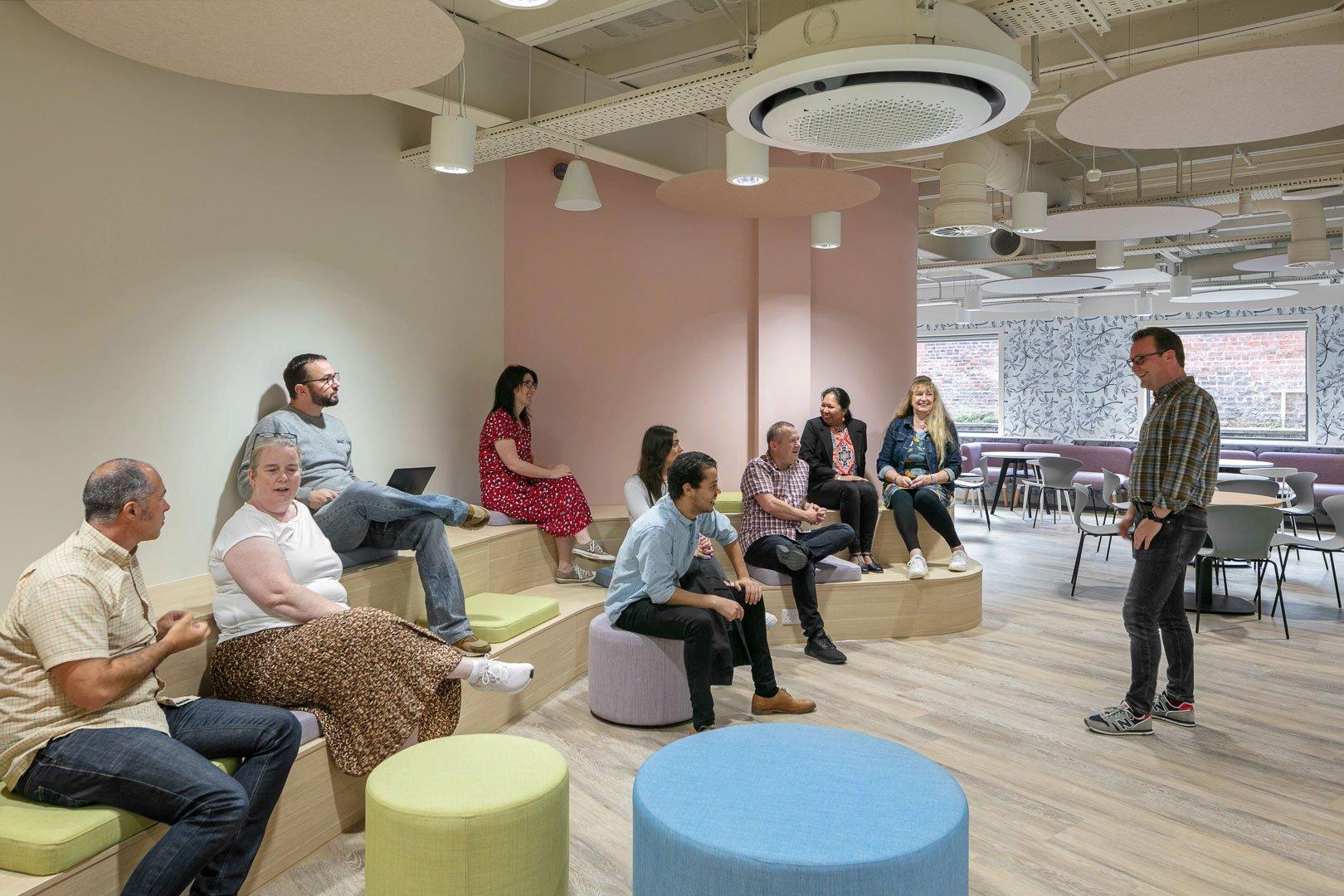
Colleagues in a training session at our head office
Every colleague, every supplier, every bunch — sustainability is a team effort.
The full picture
Flying Flowers is a brand owned and operated by Interflora British Unit. There's a long way to go, and we're not stopping here.
Read our Sustainability Plan